View Poll Results: Where did IE originate?

Voters
50. You may not vote on this poll
  • West Asia

    27 54.00%
  • Central-East Europe

    23 46.00%
Page 17 of 22 FirstFirst ... 7131415161718192021 ... LastLast
Results 161 to 170 of 211

Thread: Indo-European origins.

  1. #161
    Banned
    Join Date
    Apr 2010
    Last Online
    10-05-2014 @ 02:26 PM
    Ethnicity
    European
    Country
    European Union
    Gender
    Posts
    9,730
    Thumbs Up/Down
    Received: 1,297/53
    Given: 3,160/211

    0 Not allowed! Not allowed!

    Default

    Quote Originally Posted by Albion View Post
    This may be because some of the Neolithic cultures of Europe spoke Afro-Asiatic (formerly called Hamito-Semitic) languages. The Cucteni which influence the Yamna (Indo-Europeans) could have been amongst them.
    The Neolithic haplogroups and spread of farming suggest this is likely.
    Quote Originally Posted by Albion View Post
    I think it is likely that Europe was covered by the following language families during the Neolithic. There would have been some amount of overlap which is indicated by the blurred divisions. The second map has lines to provide a better idea of the areas covered.


    These in turn would have partially displaced the earlier hunter-gatherer populations of Europe which likely belonged to the I haplogroup. If haplogroup I was indeed descended from IJ then it is likely that Europe's hunter gatherers spoke what is now termed 'Afro-Asiatic' in my opinion.
    This was latter pushed back as Neolithic farmers replaced and assimilated the earlier cultures, with Afro-Asiatic being latter reinforced in some areas with farmers, metalworkers and traders travelling along the coasts (Megalithic culture). Basically it is Venneman's Vasconic theory whilst Finnic in NE Europe makes sense and fits the 'Finnic northern Europe theory' and South Caucasian is my own theory and ultimately I think Basque may be a distant relative of it.

    South Caucasian should really be South or North Caucasian, either or maybe even both groups could have been present.
    Those maps aren't 100% accurate, I just knocked them together in a few minutes yesterday. I'd now shrink the South Caucasian area and have most of Europe south of Ukraine speaking Afro-Asiatic with just a few South Caucasians in the mountains.
    Romania should be Afro-Asiatic, I may redraw the maps as I think about it more.

    BTW, do look into some of Theo Venneman's theories - they're only controversial because people don't want to believe Europe may once have spoken languages akin to Arabic.

  2. #162
    Banned
    Join Date
    Feb 2012
    Last Online
    04-07-2014 @ 04:46 PM
    Location
    Benitez
    Meta-Ethnicity
    Benitez
    Ethnicity
    Benitez
    Ancestry
    Benitez
    Country
    Italy
    Taxonomy
    Benitez
    Politics
    Europa league
    Age
    22
    Gender
    Posts
    5,082
    Thumbs Up/Down
    Received: 1,496/453
    Given: 1,101/856

    0 Not allowed! Not allowed!

    Default

    Quote Originally Posted by Bronze View Post
    The most likely place of origin for R1a is in south-central asia, around the region of Mehrgarh, in the Indus Valley. The diversity and frequency of R1a is the highest in this region.

    http://en.wikipedia.org/wiki/Mehrgarh
    Do you a link to that? Almost all the R1a in South Asia is R1a-Z93.

  3. #163
    Veteran Member
    Join Date
    Feb 2012
    Last Online
    01-11-2023 @ 03:37 PM
    Meta-Ethnicity
    Iranic Upper Mesopotamian
    Ethnicity
    Kurdish
    Region
    Kurdistan
    Y-DNA
    R1a1a1 (Mede => Parthian)
    mtDNA
    HV2a (Scythian)
    Religion
    Islam
    Gender
    Posts
    3,048
    Thumbs Up/Down
    Received: 1,096/184
    Given: 1,505/100

    0 Not allowed! Not allowed!

    Default

    Quote Originally Posted by Jaska View Post

    It is impossible to trace the language from genes: there are so many possible genetic lineages, and absolutely no reliable way to define which of them is connected to the IE language. The most frequent lineage is not necessarily any more probable than the less frequent lineage.
    Here I agree, Such components from calculators do not exist in reality and can give just and idea how they might have been. I believe they were mostly West Asian like with some North Euro input.


    The only way to find out the right lineage is to look at which lineage best matches the linguistic results.
    So and which does? North European which is strongest among asian admixed (not even entirely Caucasoid to begin with) finno-Ugric people?

    This is easy: the steppe has been an area of repeated linguistic expansion: PIE, Iranian, later Iranian, Bolghar Turkic (Hunnic), Avarian, Hungarian, Kipchak Turkic etc. Linguistic and migrational waves one after another! The steppe is the one particular region where linguistic continuity cannot have deep roots.
    Your making it to easy for me friend. So West Asia has not been a area of repeated linguistic expansion? Iranics, Semites, Mongols, Sumerians, Caucasians and Turkic tribes did never set a foot on West Asian land?

    Also most of your arguments are just based on assumptions not on facts.


    It still is the region which best fits the linguistic results: it is the best candidate for Proto-Indo-European homeland.
    Please clarify which linguistic "results" you mean. Are you talking about the highly speculative assumptions of some Linguists placing their assumed "Proto Indo European" language into the steppes simply for the laughable supposition horse domestication has started there, but not taking in account all the components among Indo Europeans which are clearly of West Asian origin.


    There are only two ways of how Indo Europeans developed.

    1. A Group of West Asian Pastoralists moved into the steppes, mixed with the local Hunthers and Gatheres and created a new language called "Indo-European"

    2. A Group of West Asian, already Indo European Pastoralists moved into the steppes and the local Hunthers and Gatheres adopted the language and lifestyle. Later on the "Northern Indo European" (the Hunthers and Gatheres from the Steppes) groups Indo Europeanized vast areas of North- Central Europe, Central Asia and re Indo Europeanized parts of West Asia in form of Iranics, while the Southern Indo European (Proto Indo Europeans of West Asia took other roots from the Balkans and through See to Indo Europeanize West Europe, the Balkans parts of Central, East and South Asia.

  4. #164
    Senior Member Mistic's Avatar
    Join Date
    Apr 2012
    Last Online
    08-21-2012 @ 12:32 PM
    Meta-Ethnicity
    Indo-European
    Ethnicity
    Eurasian
    Ancestry
    NW Europe and Persia.
    Country
    England
    Region
    St Albans
    Taxonomy
    Exotic Nordic
    Religion
    Pagan
    Gender
    Posts
    311
    Thumbs Up/Down
    Received: 6/0
    Given: 0/0

    0 Not allowed! Not allowed!

    Default

    A lot of this has to do with migration because of the Ice Age.

    http://www.eupedia.com/europe/neolit...rope_map.shtml

    When the ice melted, the people returned to their ancestral homelands. I've always believed in the idea that Aryans inhabited the north for a much earlier period and the Atlantean idea is cool. The elements pushed people in certain directions.

  5. #165
    Veteran Member
    Join Date
    Feb 2012
    Last Online
    01-11-2023 @ 03:37 PM
    Meta-Ethnicity
    Iranic Upper Mesopotamian
    Ethnicity
    Kurdish
    Region
    Kurdistan
    Y-DNA
    R1a1a1 (Mede => Parthian)
    mtDNA
    HV2a (Scythian)
    Religion
    Islam
    Gender
    Posts
    3,048
    Thumbs Up/Down
    Received: 1,096/184
    Given: 1,505/100

    0 Not allowed! Not allowed!

    Default

    Quote Originally Posted by Albion View Post
    The words words for flora and fauna in IE describe the forest zone and the steppes so it points to the edge of the steppes somewhere (Ukraine, Kazakhstan, Caucasus or maybe Cappadocia) but lacks words for things such as seas or Middle Eastern flora and fauna.
    As I already mentioned such a thing as "The Middle Eastern flora and fauna" doesnt exist because the Near East is to diverse in this and has changed many times over time.

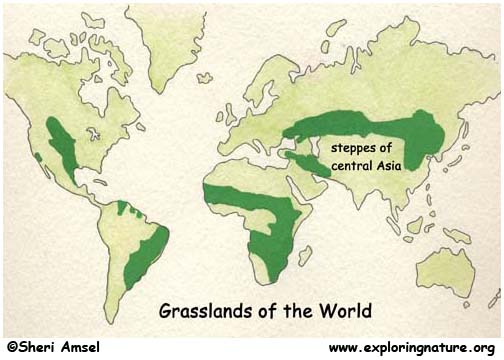
    "Steppes/Grasslands " are the best places to se pastoralism. And the Near East is where pastoralism developed.

    Look at this map here. Grasslands are not absent in the Near East at all, interesting enought Grassland is strong in the area of former Halaf Culture (fertile crescent)


    Forests are also not absent in West Asia.


    This mght be indication that they meant some more Northern regions but not real evidences imo.

    The Kurgan theory suggests that the people on the Pontic Steppe came into contact with the Cucuteni-Trypillian neolithic civilisation, at that time one of the most advanced in Europe.
    The IE people (Yamna) acquired technology from them and would latter help destroy that civilisation.

    I heard about that and this is the Group which I think they have adopted Indo European languages from. Why and how could they adopt so much of Neolthic lifestyle without being under the pressure to adopt also the language spoken to be able to communicate with the Neolthic Group.
    Last edited by Demhat; 07-08-2012 at 12:28 PM.

  6. #166
    Veteran Member
    Join Date
    Feb 2012
    Last Online
    01-11-2023 @ 03:37 PM
    Meta-Ethnicity
    Iranic Upper Mesopotamian
    Ethnicity
    Kurdish
    Region
    Kurdistan
    Y-DNA
    R1a1a1 (Mede => Parthian)
    mtDNA
    HV2a (Scythian)
    Religion
    Islam
    Gender
    Posts
    3,048
    Thumbs Up/Down
    Received: 1,096/184
    Given: 1,505/100

    0 Not allowed! Not allowed!

    Default

    Quote Originally Posted by Albion View Post


    This may be because some of the Neolithic cultures of Europe spoke Afro-Asiatic (formerly called Hamito-Semitic) languages. The Cucteni which influence the Yamna (Indo-Europeans) could have been amongst them.
    The Neolithic haplogroups and spread of farming suggest this is likely.

    This doesnt make much sense by any meanings. Neolthic expansion took place in an area where people are known to have spoken formerly "isolated languages" and a bit later Caucasian and Indo European one. While Afro Asiatic languages where clearly introduced into West Asia (the northern part where Farming and Pastoralism developed) from an area somewhere between North Africa and the Levant and is associated with the spread of E1b1b* Haplogroup and came in contact with Neolthic Groups with the spread more into the Levant and Mesopotamia by taking some J* and G* lineages.

    If we assume that Afro-Asiatic was the language of Neolthic farmers than we would have to assume that Neolthic lifestyle was introduced to West Asia through North Africa and the Levant, while it actually is the other way around and a strong Caucasoid input into Africa came from the Near East.

  7. #167
    Banned
    Join Date
    Apr 2010
    Last Online
    10-05-2014 @ 02:26 PM
    Ethnicity
    European
    Country
    European Union
    Gender
    Posts
    9,730
    Thumbs Up/Down
    Received: 1,297/53
    Given: 3,160/211

    0 Not allowed! Not allowed!

    Default

    Here are my revised linguistic maps of Neolithic Europe before the spread of IE:


    Yamna - Proto-Indo-Europeans
    Maykop and Cucteni - settled civilisations which greatly influenced the Yamna.

  8. #168
    Banned
    Join Date
    Jun 2012
    Last Online
    08-17-2012 @ 09:13 AM
    Meta-Ethnicity
    ........
    Ethnicity
    ...............
    Taxonomy
    .......
    Gender
    Posts
    259
    Thumbs Up/Down
    Received: 13/14
    Given: 0/0

    0 Not allowed! Not allowed!

    Default

    Quote Originally Posted by Albion View Post
    Those maps aren't 100% accurate, I just knocked them together in a few minutes yesterday. I'd now shrink the South Caucasian area and have most of Europe south of Ukraine speaking Afro-Asiatic with just a few South Caucasians in the mountains.
    Romania should be Afro-Asiatic, I may redraw the maps as I think about it more.

    BTW, do look into some of Theo Venneman's theories - they're only controversial because people don't want to believe Europe may once have spoken languages akin to Arabic.
    I think Afro-Asiatic substratum has been found only in Western Europe like in Celtic languages.Also we are not sure yet whether I is Mesolithic haplogroup.Haplogroup I2 was found in Neolithic sites.It could well be Neolithic marker.

  9. #169
    Veteran Member
    Join Date
    Feb 2012
    Last Online
    01-11-2023 @ 03:37 PM
    Meta-Ethnicity
    Iranic Upper Mesopotamian
    Ethnicity
    Kurdish
    Region
    Kurdistan
    Y-DNA
    R1a1a1 (Mede => Parthian)
    mtDNA
    HV2a (Scythian)
    Religion
    Islam
    Gender
    Posts
    3,048
    Thumbs Up/Down
    Received: 1,096/184
    Given: 1,505/100

    0 Not allowed! Not allowed!

    Default

    Quote Originally Posted by Albion View Post
    Here are my revised linguistic maps of Neolithic Europe before the spread of IE:


    Yamna - Proto-Indo-Europeans
    Maykop and Cucteni - settled civilisations which greatly influenced the Yamna.
    Interesting maps

    But too speculative and something entirely new which only works if we assume Europe and the Neolthic farmers were "Afro Asiatic" speakers before. And there are no evidences for this. In fact it cant work because Most of the lineages connected with Neolthic Groups throughout Europe have developed somewhere between East Anatolia, the Caucasus and West Iran, where the Afro Asiatic languages were introduced very lately. Haplogroup G and R1b have no connection to Afro Asiatic languages at all.

  10. #170
    Banned
    Join Date
    Jun 2012
    Last Online
    08-17-2012 @ 09:13 AM
    Meta-Ethnicity
    ........
    Ethnicity
    ...............
    Taxonomy
    .......
    Gender
    Posts
    259
    Thumbs Up/Down
    Received: 13/14
    Given: 0/0

    0 Not allowed! Not allowed!

    Default

    Quote Originally Posted by Alex Delarge View Post
    I saw a documentary about the discovery of America this afternoon, and they were talking about the possibility of polynesian sailors reaching California in pre-historic times. Also apparently the japanese sailed to Ecuador in pre-historic times too. The pottery was the same and there's some virus that can only be found in japanese people and Ecuadorian mummies.

    Also an european spear was found in America, which predates the crossing of the Bering strait by asians.


    So, after that, that 1st point doesn't seem so far fetched. The sea was never a blockage, it was more like a highway.
    Yes, but i meant why exactly sailing directly from WestAsia to Southern Portugal!?I have read that North African route is plausible too.

Thread Information

Users Browsing this Thread

There are currently 2 users browsing this thread. (0 members and 2 guests)

Bookmarks

Posting Permissions

  • You may not post new threads
  • You may not post replies
  • You may not post attachments
  • You may not edit your posts
  •