

3


| Thumbs Up/Down |
| Received: 758/91 Given: 660/36 |

Maybe Greeks West Asian could be more recent compared to other Southern Europeans because I noticed that Greeks can be very matchy with Turks and Armenians when using 23andmes compare genes tool.
Balkan Anatolian Turkic calculator:
11.04% Balkans
83.23% Anatolia
5.73% Turkic



| Thumbs Up/Down |
| Received: 1,688/12 Given: 1,192/5 |
waaaaay more the reality. Also, I'd expect it in Cardial Ware and Starcevo Koros Cris culture. Its already been found in Oetzi and I bet it was waaay more among populations contemporary to him further south.Originally Posted by Jaxman

I doubt Bronze age dispersals have anything to do with 'West Asian' genes though. Its been said that Dienekes is more concerned w/ 'politics' (to sum it up generally) and that is probably tr00 regarding this matter.
edit: Bronze age dispersals for its primary or initial founding in Europe I find dubious. Just to be perfectly clear. Greek expansion during the historical era probably spread it further however. But Greeks would theoretically have initially received this component during the Starcevo-Koros Kris archaeological horizon.
Last edited by Vesuvian Sky; 10-16-2013 at 11:53 PM.

| Thumbs Up/Down |
| Received: 5,058/134 Given: 5,444/57 |
To be honest I think the Cardial Ware Neolithic groups would be more Mediterranean when it comes to these autosomal components. Of course I could be wrong though. I am in line with thinking that the maritime Neolithic groups of Europe such as Cardial Ware were more Mediterranean genetically while the inland riverine groups like the LBK were more West Asian.
| Thumbs Up/Down |
| Received: 1,688/12 Given: 1,192/5 |
Both really, that is west asian and east med based on what we know of the Cardial Ware's dispersal pattern:
The earliest Impressed Ware sites, dating to 6400-6200 BC, are in Epirus and Corfu. Settlements then appear in Albania and Dalmatia on the eastern Adriatic coast dating to between 6100 and 5900 BC. The earliest date in Italy comes from Coppa Nevigata on the Adriatic coast of southern Italy, perhaps as early as 6000 cal B.C. Also during Su Carroppu civilization in Sardinia, already in its early stages (low strata into Su Coloru cave, c. 6000 BC) early examples of cardial pottery appear. Northward and westward all secure radiocarbon dates are identical to those for Iberia c. 5500 cal B.C., which indicates a rapid spread of Cardial and related cultures: 2,000 km from the gulf of Genoa to the estuary of the Mondego in probably no more than 100–200 years. This suggests a seafaring expansion by planting colonies along the coast.
Older Neolithic cultures existed already at this time in eastern Greece and Crete, apparently having arrived from the Levant, but they appear distinct from the Cardial or Impressed Ware culture. The ceramic tradition in the central Balkans also remained distinct from that along the Adriatic coastline in both style and manufacturing techniques for almost 1,000 years from the 6th millennium BC. Early Neolithic impressed pottery is found in the Levant, and certain parts of Anatolia, including Mezraa-Teleilat, and in North Africa at Tunus-Redeyef, Tunisia. So the first Cardial settlers in the Adriatic may have come directly from the Levant. Of course it might equally well have come directly from North Africa, and impressed-pottery also appears in Egypt. Along the East Mediterranean coast Impressed Ware has been found in North Syria, Palestine and Lebanon.
Also the Med component seems to be a very broad category that can be broken up into an east and west Med component. the east med was probably rather archaeic to its region but so was the west med. biased thinking IMO insists that the La Brana remains med component is due to admixture with farmer but I'm not a firm believer that geography does not play a role in genetic components. that's why after all the Med component is more separable from the SW Asian component on Globe 13 plot, even more so compared to how the N. Euro and W. Asian component seperate on same plot.
According to some geneticists logic, occupation = genetic makeup or correlates with such. However I'd rather expect then to see hunter and gatherers be just one component as well as later Neolithics like Oetzi. But this is just not the case. Even the Northern Hunter gatherers from the Mesolithic had other components to them likely based on geographic proximity to such groups and what not.
Last edited by Vesuvian Sky; 10-16-2013 at 11:50 PM.
| Thumbs Up/Down |
| Received: 5,058/134 Given: 5,444/57 |
And in reality right now we just do not know exactly how ''Mesolithic'' and how ''Neolithic'' modern Europeans are. We need more ancient autosomal DNA tested first and more research done.



| Thumbs Up/Down |
| Received: 19,961/1,115 Given: 24,668/1,452 |
So-called "west asia" is simply europe. It's only recently that mongol, turk, levant, and african dna flooded in. And it's still mainly european DNA.
No one can say for sure where this genetic component comes from but I don't think anatolia is a bad guess, but ancient anatolia, which was much different.
Out Of Africa Theory is a lie.
http://www.theapricity.com/forum/sho...88#post3431588
And a mighty angel took up a stone like a great millstone, and cast it into the sea, saying, Thus with violence shall that great city Babylon be thrown down, and shall be found no more at all.
| Thumbs Up/Down |
| Received: 758/91 Given: 660/36 |
What about the African that southern Europeans score and the Asian that some North Euros have? Who brought those over?
If you think West Asian is mostly a European component its abundant all over from Central Asia all the way to The Levant and Anatolia which means the populations that live there are mostly European by your logic.
Balkan Anatolian Turkic calculator:
11.04% Balkans
83.23% Anatolia
5.73% Turkic

| Thumbs Up/Down |
| Received: 1,803/208 Given: 288/124 |
Aren't you tired of repeating the same shit again and again? Where are your references? Just because you claim this doesn't mean it's true.
I am sorry to tell you this but as a European (mutt), you probably have around 10% ancient Mong admix.

| Thumbs Up/Down |
| Received: 93/35 Given: 77/42 |
West asian is a seperate component of its own, its not european

| Thumbs Up/Down |
| Received: 335/132 Given: 303/87 |
Pre-mong, which isn't the same.
In general, europeans have more neanderthal than mong, to put things into perspective.
There are currently 1 users browsing this thread. (0 members and 1 guests)
 Posting Permissions

 Reply With Quote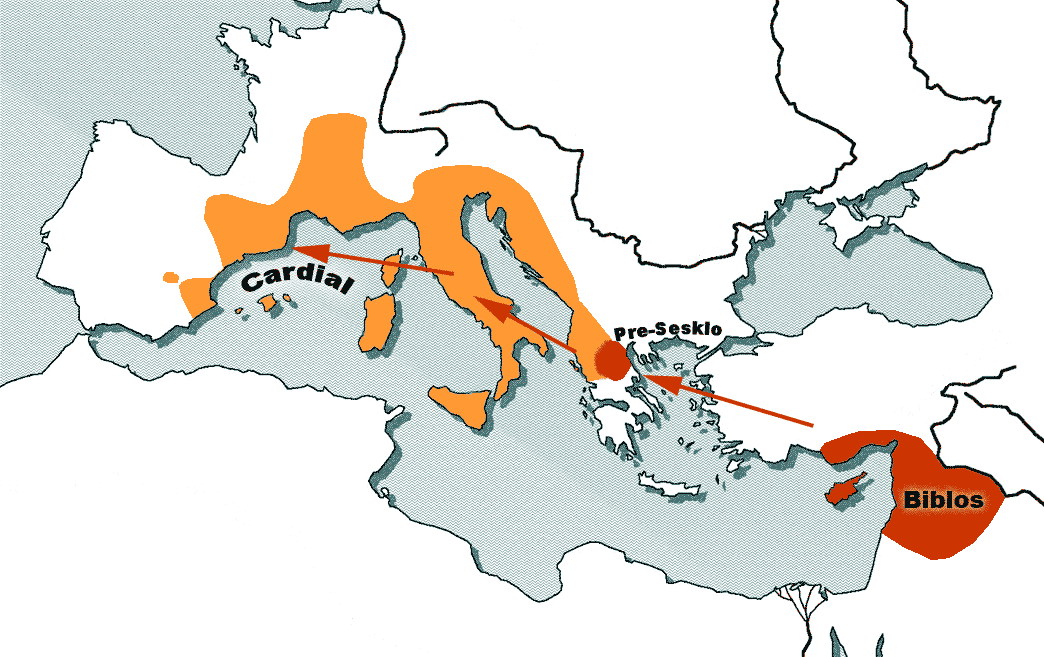

Bookmarks