

0







| Thumbs Up/Down |
| Received: 3,979/259 Given: 2,431/157 |

Because we have the ruins of these cities, and they are dated as such.Originally Posted by Kis_Kócos

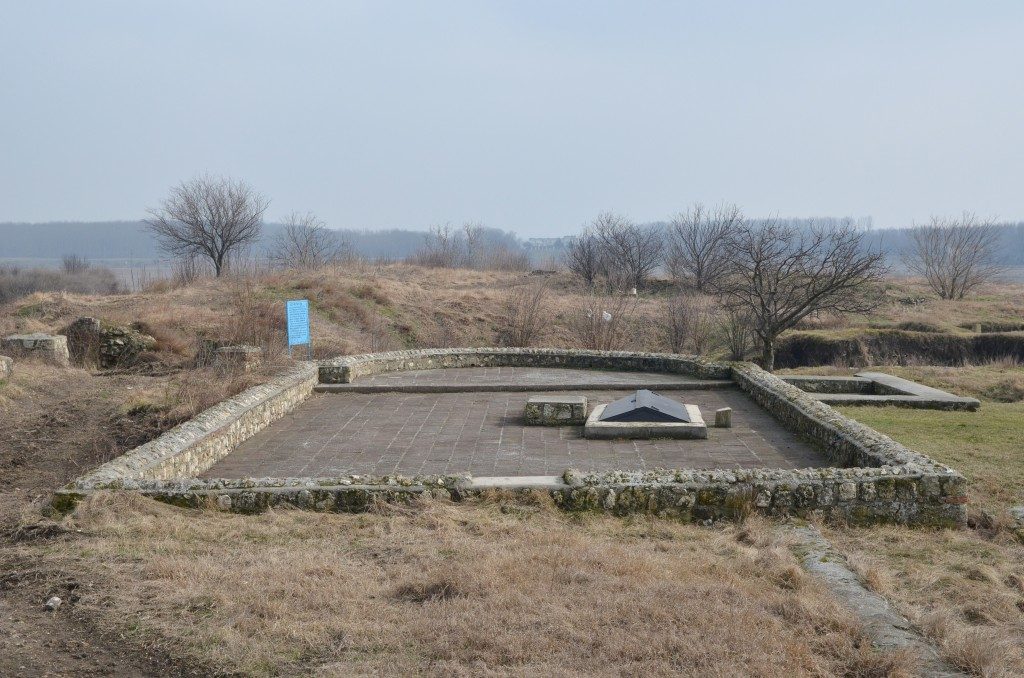
Look here stupid, one of the Christian churches built in Romania between 4th and 6th century:
who were building these churches, aliens?



| Thumbs Up/Down |
| Received: 18,393/409 Given: 11,877/294 |
Dude, gepids, goths and partly huns were christians too
https://www.jstor.org/stable/2303783...n_tab_contents
| Thumbs Up/Down |
| Received: 3,979/259 Given: 2,431/157 |
Oh yeah, huns were building churches in Roman towns.
You are delusional beyond belief.
| Thumbs Up/Down |
| Received: 18,393/409 Given: 11,877/294 |
Ulfilas, or Wulfila, was the son or grandson of Christians from Sadagolthina (near Parnassus[4][5]) in Cappadocia who had been taken captive by the Goths. In 337 or 341, Ulfilas was sent by Arian emperor Constantius II to preach to the Goths in their language, and became the first bishop of the (Arian Christian) Goths. By 348, one of the (pagan) Gothic kings (reikos) began persecuting the Christian Goths, and Ulfilas and many other Christian Goths,[6] fled to safety within the Roman Empire's borders.
Between 348 and 383, Ulfilas translated the Bible into the Gothic language.[7][8] Thus some Arian Christians in the west used the vernacular languages, in this case including Gothic and Latin, for services, as did Christians in the eastern Roman provinces, while most Christians in the western provinces used Latin.
https://en.wikipedia.org/wiki/Christ...rmanic_peoples
"In addition to these pagan beliefs, there are numerous attestations of Huns converting to Christianity and receiving Christian missionaries."
https://en.wikipedia.org/wiki/Huns
| Thumbs Up/Down |
| Received: 18,393/409 Given: 11,877/294 |
Why not? And Dacia was not roman in the hun age.
| Thumbs Up/Down |
| Received: 3,979/259 Given: 2,431/157 |
There's no material proof that Huns and Goths living in Romania were Christian between 4th and 7th century.
First Germanic people Christianized en-masse and living outside the Roman empire were the Franks in 6th century and Saxons in the 7th century. They were thousands of kilometers away from Romania.
Stop spewing bullshit.
These are Roman churches, built in Roman towns, centuries after the Aurelian withdrawal.
| Thumbs Up/Down |
| Received: 18,393/409 Given: 11,877/294 |
I linked many proof for that, don't you read?
"The first wave of the Great Migrations, (300 to 500) brought the influence of migratory tribes, especially the Germanic tribes. The Visigoths established a kingdom north of Danube and Transyilvania between 270-380.
In 380 a new power reached Transylvania, the Huns. They drow back every Germanic people from the Carpathian Basin except the Gepids. The Alans, Vandals, Quads left the region toward the Roman Empire. The Huns extended their rule over Transylvania after 420. After the disintegration of Attila's empire, Transylvania was inhabited by the remnants of various Hunnic, and a Germanic tribe, the Gepids. The Transyilvanain Gepids had a semiindependent status inside the Kingdom of Gepids, but this relative autonomy came to an end in the late 6th century. "
https://en.wikipedia.org/wiki/Ancien...f_Transylvania
Goths, huns were christians:
"Ulfilas, or Wulfila, was the son or grandson of Christians from Sadagolthina (near Parnassus[4][5]) in Cappadocia who had been taken captive by the Goths. In 337 or 341, Ulfilas was sent by Arian emperor Constantius II to preach to the Goths in their language, and became the first bishop of the (Arian Christian) Goths. By 348, one of the (pagan) Gothic kings (reikos) began persecuting the Christian Goths, and Ulfilas and many other Christian Goths,[6] fled to safety within the Roman Empire's borders.
Between 348 and 383, Ulfilas translated the Bible into the Gothic language.[7][8] Thus some Arian Christians in the west used the vernacular languages, in this case including Gothic and Latin, for services, as did Christians in the eastern Roman provinces, while most Christians in the western provinces used Latin."
https://en.wikipedia.org/wiki/Christ...rmanic_peoples
"In addition to these pagan beliefs, there are numerous attestations of Huns converting to Christianity and receiving Christian missionaries."
https://en.wikipedia.org/wiki/Huns
The problem is you look down these peoples, and you think every not latin not roman people were primitive savages with low IQ who built nothing, that's not true.
| Thumbs Up/Down |
| Received: 3,979/259 Given: 2,431/157 |
^ Do you understand the concept of a Roman town?
The church I posted earlier is in a Roman town.
Are you saying Huns built the church in a Roman town, are you this fucking stupid?
Otherwise yeah, some bishops were sent to Christianize Goths early, and some converted, but were forced to flee to the Roman empire. There was no en-masse conversion of Goths before Franks in the 6th century. And more importantly, there's no material proof that Christian Goths lived in Romania between 4th and 7th century.
If you have material proof show it to me. Put up or shut up.
Last edited by ixulescu; 02-02-2019 at 03:21 PM.
| Thumbs Up/Down |
| Received: 18,393/409 Given: 11,877/294 |
1. I'm not bitch
2. You said this churches built in 4-7 century:
"There's no material proof that Huns and Goths living in Romania were Christian between 4th and 7th century."
So it cannot be older or you don't know what are you talking about.
3. Goths, huns lived there in this time:
https://en.wikipedia.org/wiki/Ancien...f_Transylvania
"The East Germanic Goths and Gepids, who lived in sedentary communities, were the first new arrivals. The Goths dominated Moldavia and Wallachia from the 290s, and parts of Transylvania from the 330s. Their power collapsed under attacks by the nomadic Huns in 376. "
https://en.wikipedia.org/wiki/Romani...ly_Middle_Ages
Other source:
http://www.elib.hu/03400/03407/html/24.html
| Thumbs Up/Down |
| Received: 3,979/259 Given: 2,431/157 |
More precisely, this church was build in the 6th century in a Roman town.
This means that there was a Latinophone population living there in the 6th century.
Unless of course, Huns built the church in a Roman town, which is most idiotic argument Hungarian nationalists offered me in a while.
In reality, Huns sacked the city once (5th century), but it was rebuilt. The church was raised afterwards.
There are currently 1 users browsing this thread. (0 members and 1 guests)
 Posting Permissions

 Reply With Quote
Bookmarks