

1





| Thumbs Up/Down |
| Received: 8,455/56 Given: 8,712/5 |

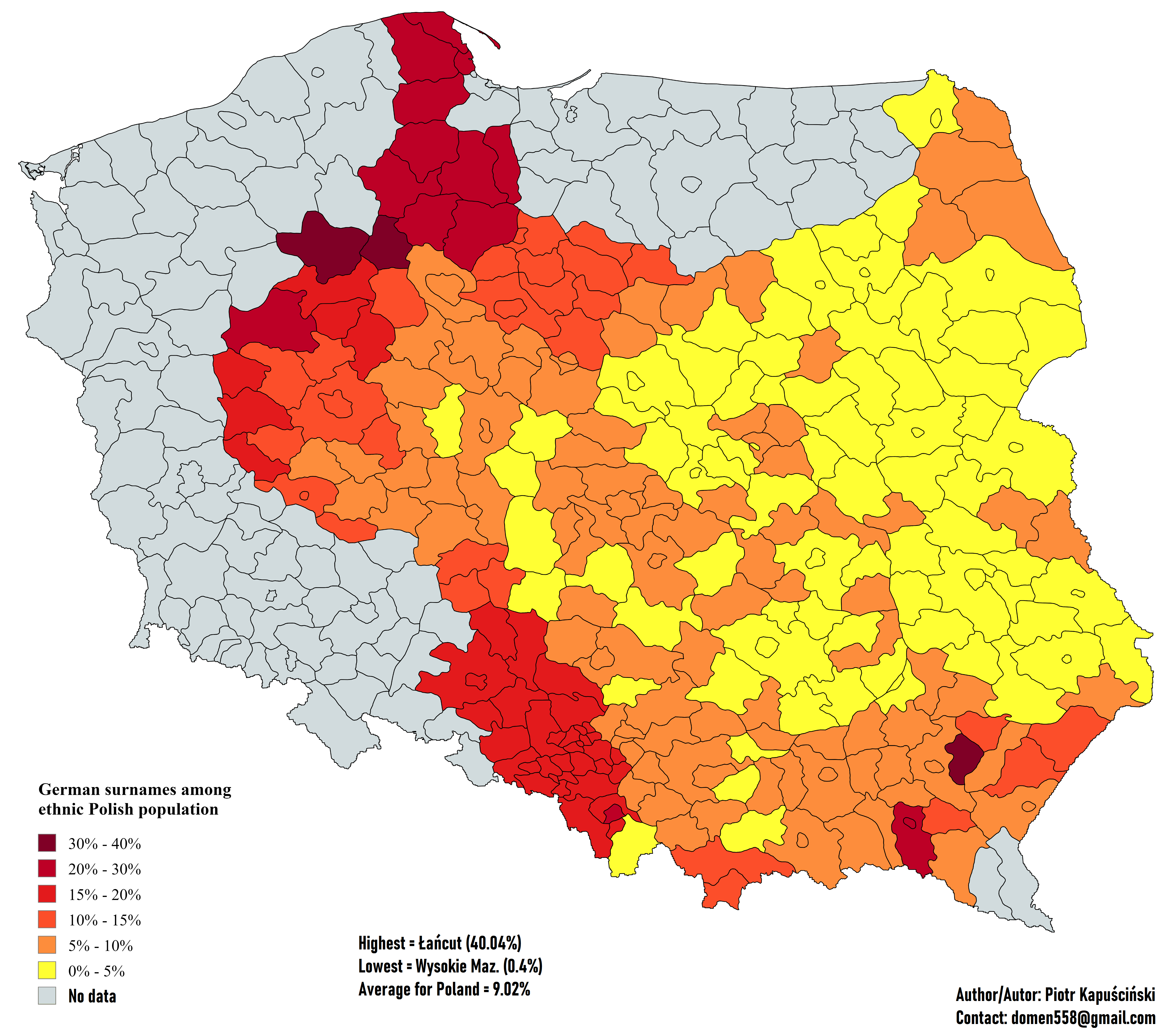
A very nice map!Originally Posted by Peterski

German surnames became fixated at abt. 1350 +/- 100 years (the regional variation is even bigger). Polish far later IMO. It would be interesting to know if a German with a German fixated surname, that became Polonised in 1300 AD lost his German surname and got a fixated Polish one in 1500 AD (figuratively).
Last edited by rothaer; 05-09-2026 at 12:38 AM.
Target: rothaer_scaled
Distance: 1.0091% / 0.01009085
39.8 (Balto-)Slavic
39.0 Germanic
19.2 Celtic-like
1.8 Graeco-Roman
0.2 Finnic-like



| Thumbs Up/Down |
| Received: 23,744/744 Given: 20,581/1,184 |
The age of these 36 samples is 1100-1200 AD, the average age is 1100 AD (and the average age of every individual sample is also 1100 AD, except one sample for which it is 1089 AD and one for which it is 1171 AD). So I think we can agree that it is unlikely that any Restgermanen survived for such a long time still unmixed with the Slavic population.
Okay I agree. However my assumption was that Poles from Wielkopolska Polonized mostly that early wave of German settlers (who probably still had no Slavic admixture or just a small amount). By the way a comparison of Early Medieval Wielkopolska and Modern Wielkopolska Y-DNA haplogroups also shows that there must have been German admixture.
(I included Kuyavia, Santok & Sieradz-Leczyca Land as they are sometimes considered parts of Wielkopolska)
(however, modern percentages from Abreu-Głowacka and Grochowalski are just for Wielkopolskie Voivodeship)
Modern figures are from Abreu-Głowacka 2013 study (interpreted by Michal Milewski) and Grochowalski 2020:
https://www.termedia.pl/Badania-popu...23736,1,0.html
https://www.frontiersin.org/journals...20.567309/full
Michal's interpretation - https://genoplot.com/discussions/post/717011
Early Medieval samples can be found in my Google Spreadsheet here:
https://docs.google.com/spreadsheets...it?usp=sharing
Sieradz-Leczyca samples are mostly from Lutomiersk, where there is a very high proportion of R1b (7 out of 10).
My DNA Origin analysis for 16 EUR (you get 2 reports examining ancestry from 3012 regions, 226 countries): https://www.exploreyourdna.com/DNAOrigin.aspx
This analysis is not based on G25 but on ADMIXTURE. And it has more regions than any other DNA test!
| Thumbs Up/Down |
| Received: 8,455/56 Given: 8,712/5 |
Thanks.
And: Whatever new hints do come on this topic, it goes all in the same direction: There was no relevant proportion of restgermanen. The demographic disaster in the eastern half of Germania Magna was complete.
Target: rothaer_scaled
Distance: 1.0091% / 0.01009085
39.8 (Balto-)Slavic
39.0 Germanic
19.2 Celtic-like
1.8 Graeco-Roman
0.2 Finnic-like
| Thumbs Up/Down |
| Received: 23,744/744 Given: 20,581/1,184 |
Yeah if Proto-Slavs were Belarusian-like and Pre-Ostsiedlung Wielkopolska are also Belarusian-like, then there is not much room for Restgermanen admixture. Only if Proto-Slavs were Lithuanian-like then a quite significant admixture would be possible.
My DNA Origin analysis for 16 EUR (you get 2 reports examining ancestry from 3012 regions, 226 countries): https://www.exploreyourdna.com/DNAOrigin.aspx
This analysis is not based on G25 but on ADMIXTURE. And it has more regions than any other DNA test!


| Thumbs Up/Down |
| Received: 257/4 Given: 57/1 |
Belarusians have a huge ethnic Baltic admixture that can be quantitatively mapped by the evidence: frequency of Y-DNA N1c increases in a direction towards the Lithuanian and Latvian borders and decreases in a direction toward the Ukrainian border.
Something is wrong with Wielkopolska_Medieval samples.
There are currently 1 users browsing this thread. (0 members and 1 guests)
 Posting Permissions

 Reply With Quote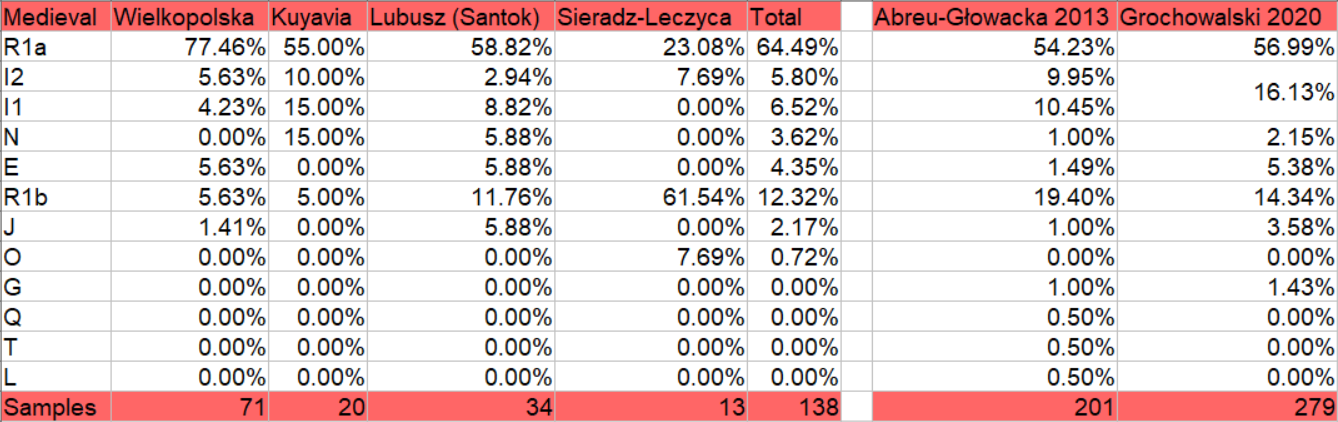
Bookmarks