Loki
The History and Cultural Legacy of Counter-Strike 1.6

by , 05-23-2026 at 06:56 PM (3969 Views)
The History and Cultural Legacy of Counter-Strike 1.6
You remember that smell, don't you? The heavy scent of ozone, dusty keyboards, and cheap energy drinks in a dimly lit basement room. You remember the rhythmic clicking of mechanical mice and the shouting of teammates from across the row. Whether you were a professional athlete at a major tournament or a schoolboy skipping classes, Counter-Strike 1.6 wasn't just a game - it was a lifestyle. Even today, decades after its release, this "mod that could" remains a titan of the industry, defying the laws of aging in a world obsessed with 4K graphics and battle passes.
From a Humble Mod to a Global Phenomenon
The story of the legendary Counter-Strike begins not in a corporate boardroom, but in the bedrooms of two visionary modders: Minh "Gooseman" Le and Jess Cliffe. Back in 1999, you didn't have massive budgets; you had passion. Using the GoldSrc engine from Half-Life, they created a tactical shooter that focused on a simple yet addictive premise: Terrorists vs. Counter-Terrorists.
As you followed the early beta releases, the buzz grew too loud for Valve to ignore. They didn't just see a mod; they saw the future. Valve acquired the rights, hired the creators, and the rest is history. What started as a free modification evolved into a standalone behemoth that eventually culminated in the definitive 1.6 version released in 2003 via the then-new (and very controversial) Steam platform.
Why Version 1.6 Became the Eternal Gold Standard
You might wonder why, out of all the iterations, version 1.6 is the one etched into the hearts of millions. It wasn't just an update; it was the "final form" of a masterpiece. This version introduced the iconic Famas and Galil rifles, added the tactical shield, and fixed the bug-ridden networking of previous builds.
But more importantly, 1.6 hit the perfect sweet spot of physics and "feel." The movement was fluid, the "wallbanging" (shooting through solid objects) added a layer of strategic depth, and the recoil patterns required actual muscle memory. It was an honest game. When you missed a shot, you knew it was your fault, not the engine's. This high skill ceiling made it the ultimate competitive tool.
The Addictive Formula: Economics and Tactics
Have you ever stopped to think about why the gameplay remains so cult? It’s the economy. Counter-Strike introduced a risk-versus-reward system that changed shooters forever. You don't just run and gun; you manage your finances. Do you go for a "Full Buy" and risk everything on an AWP, or do you play an "Eco Round" with nothing but a glock and a dream?
Every round is a mini-chess match. The balance between the AK-47’s raw power and the M4A1’s silenced precision created a tactical duality that never gets old. The chaotic rushes on "B" sites and the tense 1v3 clutches provided a shot of adrenaline that modern games still struggle to replicate.
The Era of LAN Parties and Computer Clubs
If you grew up in Eastern Europe or the CIS countries, your childhood was likely defined by the local computer club. This was the social melting pot of the early 2000s. You didn't just play online; you sat next to your rival, feeling the heat from their monitor.
In this era, communities CS 1.6 from csget.me played a massive role in the development of the game. These organizations were more than just websites; they were the backbone of the club culture, providing the necessary builds, server configurations, and masterservers that kept the local scenes alive. They helped transform a simple game into a social movement where "1v1 me at the club" was the ultimate challenge of honor.
Legendary Maps and the Custom Universe
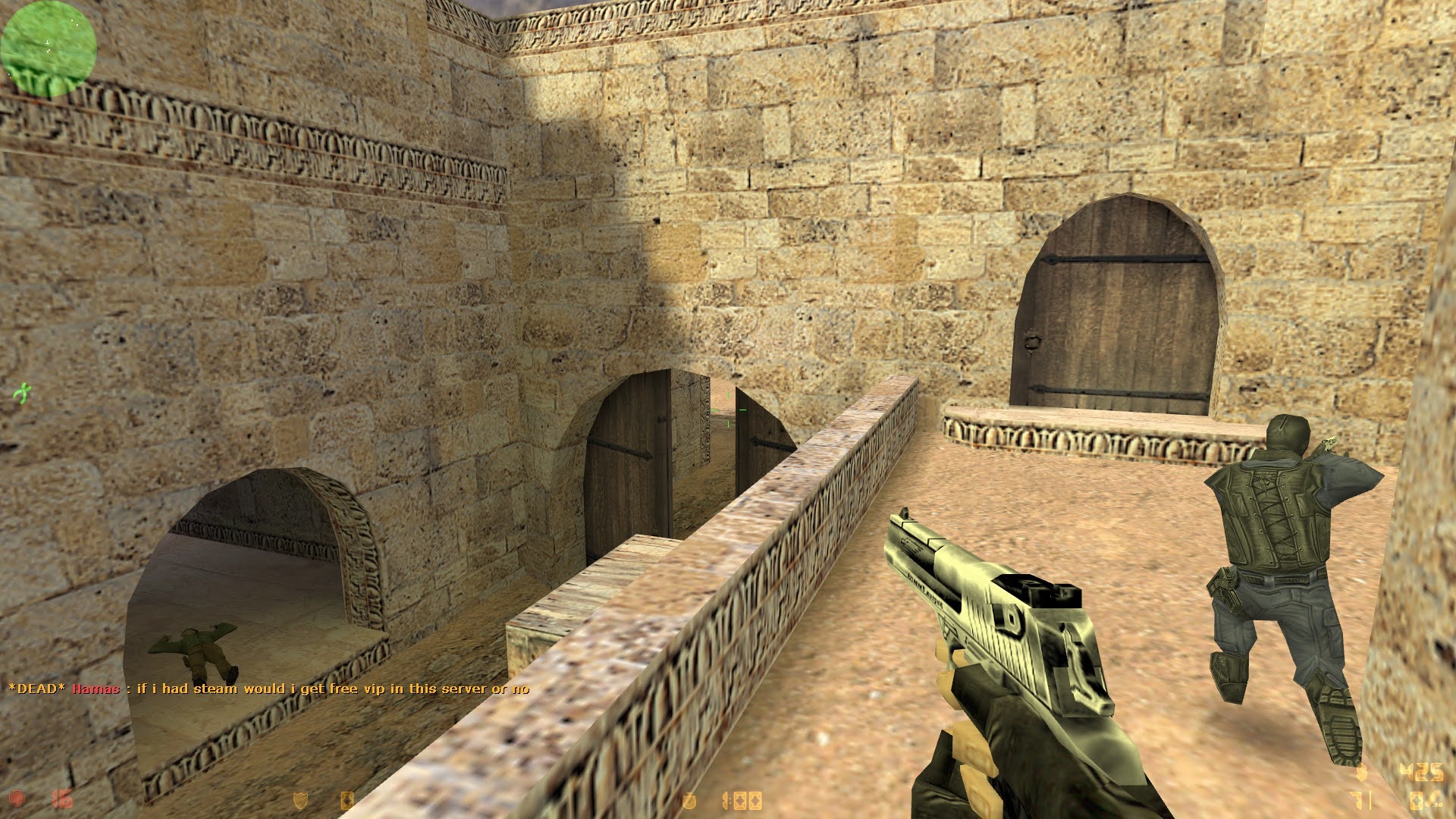
You know the layout of de_dust2 better than your own neighborhood. You can probably navigate de_inferno or de_nuke with your eyes closed. These maps aren't just levels; they are masterpieces of symmetrical design and tactical lanes.
Beyond the official maps, the chaotic creative energy of the community gave us "Warcraft 3" mods, "Superhero" servers, and the legendary "Surf" and "Kreedz" maps. You could spend years in the game and never touch a bomb site, instead perfecting your air-strafing or leveling up your undead orc on a custom server. This versatility ensured that there was always something new to master.
The Birth of Professional Esports
Before there were multi-million dollar arenas and Twitch streams, there were CPL, WCG, and ESWC. You watched 240p demos of legends like HeatoN, Potti, and spawn, trying to mimic their spray patterns. Counter-Strike 1.6 was the first true global esport.
It turned "gaming" into a legitimate profession. Teams like SK Gaming, Fnatic, and NAVI started their journeys here. The legendary moments - like the "spawn ninja defuse" or the "wall of fire" - are the myths and legends of our generation. 1.6 proved that gaming could be a spectator sport, paving the way for the industry we see today.
Early Internet Culture and the "Movie" Scene
Long before YouTube became a giant, the CS community was busy making "fragmovies." Using complex console commands and HLAE, creators produced cinematic experiences like "Mortal Teamwork" or "The Fellowship of Noob."
The game birthed its own language. You learned to "rush B," you knew what it meant to be "camping," and you definitely knew the saltiness of being "pwned." This slang permeated the early internet, creating a shared identity for gamers worldwide. It was a digital brotherhood forged in the fires of de_aztec.
A Lasting Impact on the Industry
Without the foundations laid by 1.6, games like Valorant or even CS2 wouldn't exist in their current form. The core mechanics - recoil control, utility usage, and objective-based play - became the blueprint for the tactical shooter genre.
Developers still look back at the balance of 1.6 as a case study in perfect game design. It taught the industry that you don't need fancy gimmicks if your core gameplay loop is perfect. It’s a testament to the idea that "simple to learn, impossible to master" is the recipe for immortality.
The Legacy Lives On: Why We Still Play
You might think that a game from 2003 would be a ghost town, but you'd be wrong. The community is as vibrant as ever. Thousands of servers are still packed every night with veterans reliving their youth and newcomers discovering the "hardcore" roots of their favorite genre.
The demand is still massive. People constantly look for a way to download Counter-Strike 1.6 because modern shooters often feel too bloated or hand-holding. There is a raw, visceral satisfaction in a headshot from a 1.6 USP that modern engines just can't catch. It’s a piece of digital history that you can still touch and play.
Counter-Strike 1.6 isn't just a software package; it's a collective memory of a generation that saw the digital world explode. It’s the sound of a defuse kit, the flash of a grenade, and the glory of a last-second clutch. Whether you are a veteran returning to your roots or a curious gamer wanting to see where it all began, this game offers an experience that is both punishing and immensely rewarding.




 Go to Profile
 Mark as Read