

0








| Thumbs Up/Down |
| Received: 1,138/362 Given: 337/30 |

What a shame they did not check Y-DNA. I expect Minoans to have J2a, like myself, but with different subclade. Modern Cretans are 33% J2a.
Arab peace-loving:Originally Posted by ZnZn

Ask Philo anything you'd like barring obvious troll questions



| Thumbs Up/Down |
| Received: 21,614/1,246 Given: 11,239/1,825 |
They probably looked like modern Cretans.



| Thumbs Up/Down |
| Received: 2,449/120 Given: 241/57 |



| Thumbs Up/Down |
| Received: 1,778/5 Given: 1,668/6 |
| Thumbs Up/Down |
| Received: 1,778/5 Given: 1,668/6 |


| Thumbs Up/Down |
| Received: 2,927/395 Given: 1,401/616 |
Hopefully better looking.
Eurogenes EUtest V2 K15 Oracle-x ------------------ McDonald results
Spanish_Galicia 43.35% ------------------ Spain - 42.3%
North_Amerindian 14.83% -----------French - 19.9%
Spanish_Extremadura 8.70% --------Maya - 16.1%
Bantu_S.E. 8.62% ------------- Moroccan - 13.9%
Algerian 5.98% --------------------- Yoruba - 7.8%
Portuguese 4.68%
Orcadian 4.15%
| Thumbs Up/Down |
| Received: 2,449/120 Given: 241/57 |
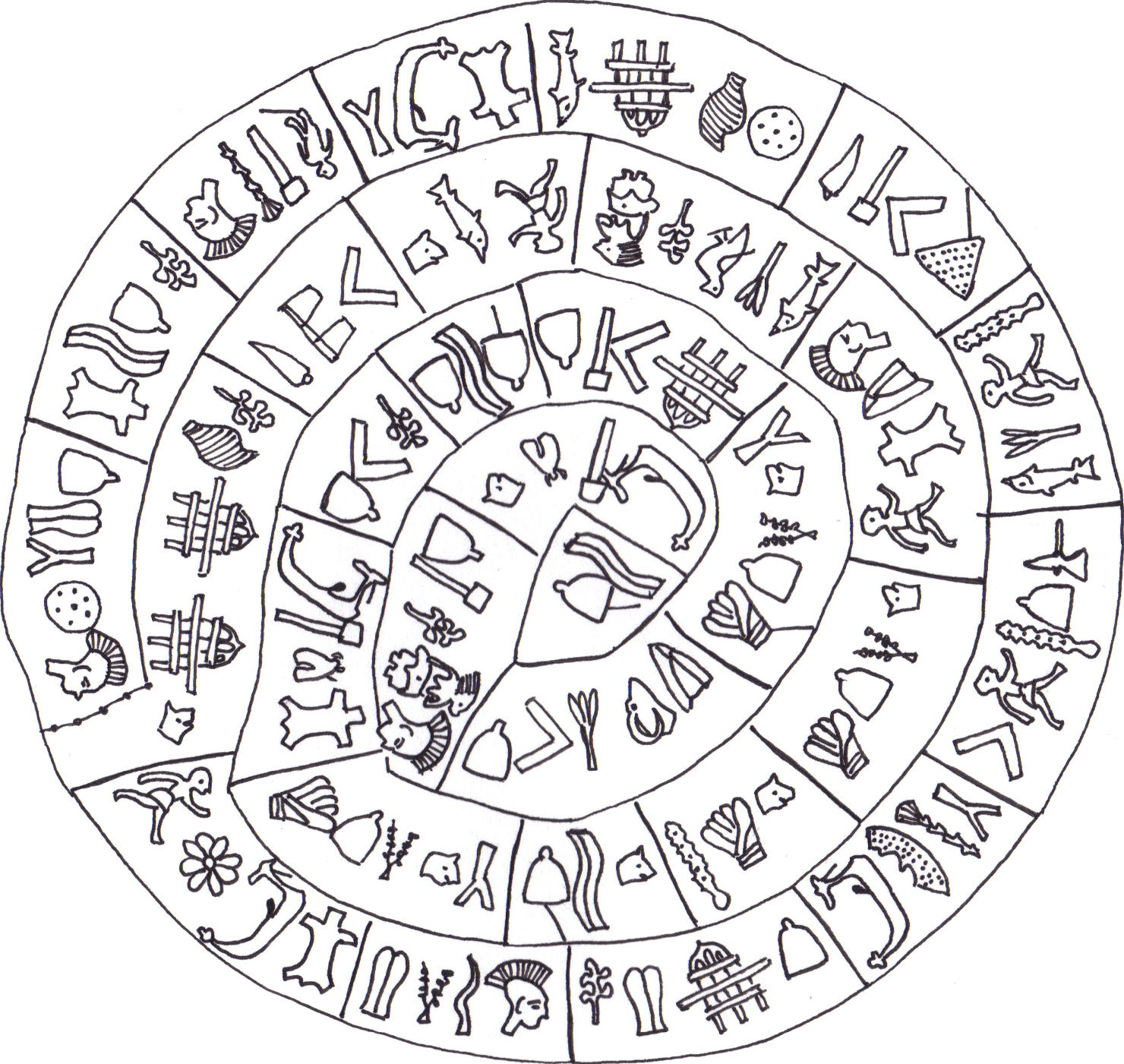
Phaistos disk

| Thumbs Up/Down |
| Received: 2,449/120 Given: 241/57 |
The Minoan Catastrophe:
The Theran Pyroclastic Surge Theory
The author discusses the possibility that a pyroclastic surge(s) of superheated dry steam traveled at very high speed over 110 kilometers of sea water to incinerate large areas of the island of Crete during the Bronze Age eruption of the Santorini volcano.
Science has long believed that the Minoan Santorini eruption was similar in scale to the Krakatau eruption of 1883 in Indonesia. More recent measurements of Santorini's eruption deposits indicate that it was actually closer to ten times bigger than Krakatau with a VEI (Volcanic Explosivity Index) of seven. This makes Santorini one of the largest volcanic eruptions in the last 20,000 years. Only Tambora in 1815 and a few other eruptions were bigger.
http://www.minoanatlantis.com/Minoan_Catastrophe.php
| Thumbs Up/Down |
| Received: 2,449/120 Given: 241/57 |
The disc of Phaistos is the most important example of hieroglyphic inscription from Crete and was discovered in 1903 in a small room near the depositories of the "archive chamber", in the north - east apartments of the palace, together with a Linear A tablet and pottery dated to the beginning of the Neo-palatial period (1700- 1600 B.C.).
According to mythology, Phaistos was the seat of king Radamanthis, brother of king Minos. It was also the city that gave birth to the great wise man and soothsayer Epimenidis, one of the seven wise men of the ancient world.
Excavations by archaeologists have unearthed ruins of the Neolithic times (3.000 B.C.).
During the Minoan times, Phaistos was a very important city-state. Its dominion, at its peak, stretched from Lithinon to Psychion and included the Paximadia islands. The city participated to the Trojan war and later became one of the most important cities-states of the Dorian period.
Phaistos continued to flourish during Archaic, Classical and Hellenistic times. It was destroyed by the Gortynians during the 3rd century B.C. In spite of that, Phaistos continued to exist during the Roman period.
Phaistos had two ports, Matala and Kommos.


| Thumbs Up/Down |
| Received: 345/22 Given: 69/0 |
They definitely had J2a but they had other haplogroups too (like R1b-M269 and G2a). In Greek mythology Minoans are linked with Anatolian Indo-European speaking tribes (Lycians and Carians) and the y-dna haplogroups of Cretans are still similar to people from Anatolia, be it Greeks or Turks. R1b + J2a + G2a
There are currently 1 users browsing this thread. (0 members and 1 guests)
 Posting Permissions


 Reply With Quote



Bookmarks