

1




| Thumbs Up/Down |
| Received: 3,746/73 Given: 5,142/86 |

Can you explain this diagram?Originally Posted by MS85


| Thumbs Up/Down |
| Received: 7,949/223 Given: 57,097/504 |
Very nice thread





| Thumbs Up/Down |
| Received: 1,250/11 Given: 524/7 |
Yes, I understand that the language Iranians speak now may have originated with Sintashta and Andronovo but genetically their contribution to modern Kurds and Iranians is very limited and any genetic contribution they would have to modern Kurds and Iranians would be through Iron Age steppe nomads such as Alans, Sarmatians, Saka and the like, but probably 50% of the genetic contribution for Kurds and other Iranians would of course be the native Zagrosian pastoralists and like you said the rest of the genetic contribution would be from Central Asia via the BMAC farmers and Iron Age steppe nomads and some later Turkic admixture.
In fact the guy at Eurasiandna.com did an analysis of this not using the Eurogenes amateurish G25 nmonte but with the Admixtools qpAdm that researchers use in scientific papers ( I haven't seen a single scientific paper use G25 nmonte). What he found out when he tried to model Kurds ( other Iranians and Azeris would be included as they are our very close cousins) with strictly Sintashta and Iran Chl is that Sintashta was missing some ingredients that modern Iranians have and the models with strictly Iran Chl + Sintashta failed.
Passing models in papers generally show a p-value greater than 0.05.
https://eurasiandna.com/impact-of-th...an-demography/
[IMG][/IMG]
But when he modeled Iranians with qpAdm using Iran Chl + Saka , the models passed very well because Saka had some of those ingredients that modern Iranians have that Sintashta didn't have
[IMG][/IMG]
I believe the Iran Chl would be even lower if he had used BMAC + Iran Chl + Saka
| Thumbs Up/Down |
| Received: 1,250/11 Given: 524/7 |
Yeah I vaguely remember that he was trying to even shit on David Reich when Reich had either talked about Yamnaya's West Asian half being south of the Caucasus around Iran or proto Indo European coming from there. Someone might remember. Everything revolves around East Europe for him.
| Thumbs Up/Down |
| Received: 1,250/11 Given: 524/7 |
It shows modern Iranians very close to Iran Chl but shifted in the direction of the steppe but interestingly Iron Age steppe nomads are missing from the PCA. In general PCAs are very rough tools just to give a very general idea of how things look like and its hard to make accurate conclusions based on them for many reasons. They can also be misleading because they only show 2 dimensions at a time. I bet on the other dimensions of the PCA if you plot them Iranians would be quiet far from Iran Chl because Iran Chl doesn't have something that modern Iranians have which is quiet a bit of East Eurasian.
I have also read that ancient samples have quiet a bit of DNA damage and are not diploid samples like modern people and this skews the results too.

| Thumbs Up/Down |
| Received: 514/87 Given: 315/40 |
Who made this and where is this from? What is the source of the naming?
| Thumbs Up/Down |
| Received: 3,746/73 Given: 5,142/86 |
Yea I was trying to see if he can accurately explain what it shows. Nomadic Iron age herders were mostly likely still pretty close to Early Iranics considering the amount of steppe.


| Thumbs Up/Down |
| Received: 747/166 Given: 1,145/208 |
There is zero linguistical or archaelogical evidence for this. Saka probably had a very limited genetic impact outside of the steppes, Most steppe ancestry in West and South Asia predates Saka.
Steppe ancestry to West Asia was brought by people similar to Turkmenistan_IA which were Pamiri-like and around 50% Sintashta and 50% BMAC. So using them as reference Kurds probably have around 30-40% early IA_Iranian ancestry from Central Asia
| Thumbs Up/Down |
| Received: 747/166 Given: 1,145/208 |
This analyze is bullshit and the sam guy claimed that Pashtuns have significant kurdish admixture lol
| Thumbs Up/Down |
| Received: 747/166 Given: 1,145/208 |
Well the facts dont change because you dont like them. You are just butthurt because history and genetics are not supporting your nationalist fantasy tales about "muh pur great Aryan ancestors". Andronovo had only mongolid admixture in the peripheral regions and early Andronovo/Sintashta was zero mongolid. Probably less mongolid than you and modern day West Asians. Also R1a-Z93 is the primarmy marker of Aryans and please dont try to deny that because you dont have R1a. R1a is an Indo-European marker and was found in Andronovo and Corded Ware but was absent in West Asia and Central Asia prior to the Iron Age/Late Bronze Age
There are currently 2 users browsing this thread. (0 members and 2 guests)
 Posting Permissions

 Reply With Quote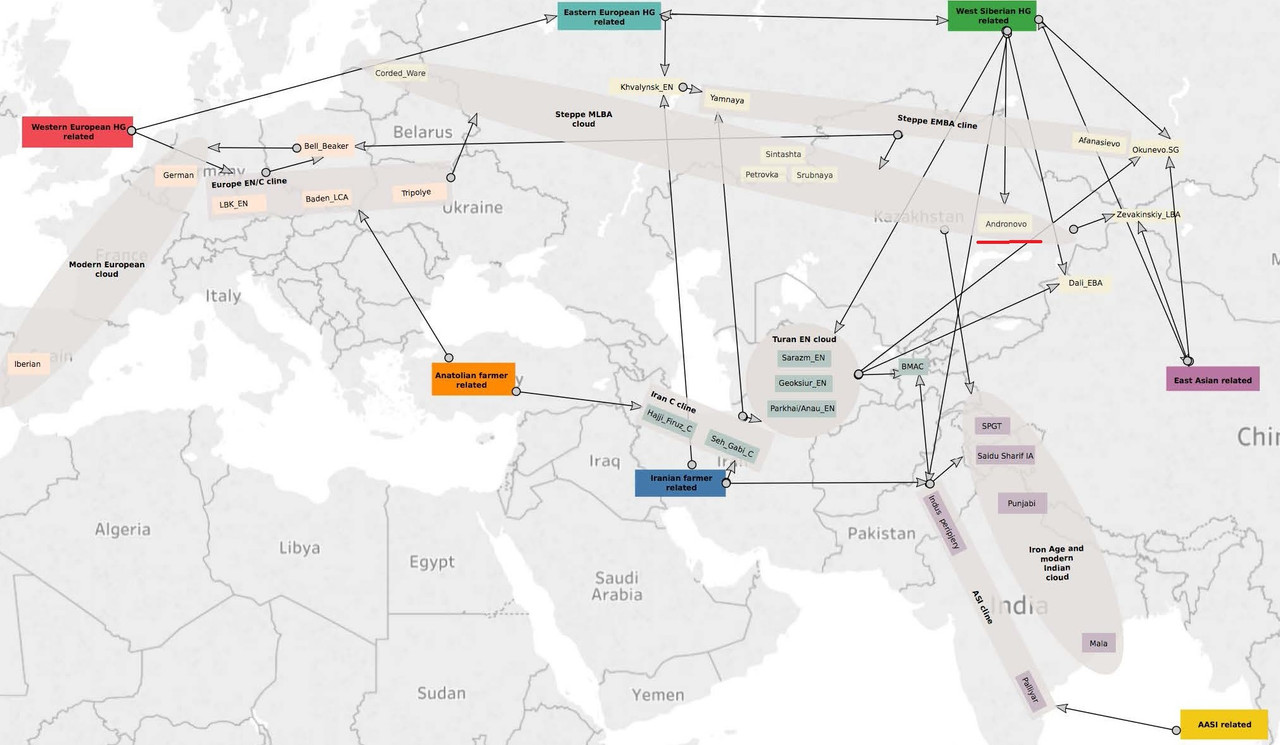
Bookmarks