

2








| Thumbs Up/Down |
| Received: 17,266/194 Given: 8,168/117 |

Very good paper from a decade ago by Heinrich Harke, that sums it all up well - Anglo-Saxon Immigration and Ethnogenesis
https://www.researchgate.net/publica...d_Ethnogenesis
Some key points:
As a result, the model envisages two broad phases in the creation of the Anglo-Saxons: an ethnically divided conquest society in the 5th/6th centuries in which immigrants and their descendants practised a form of ‘apartheid’ in order to preserve their dominance; and a phase of increasing acculturation and assimilation of the natives in the 7th/8th centuries that laid the foundations of a common English identityThe only approach possible is, therefore, via biological data: modern DNA, stable isotopes and skeletal evidence. All of these can offer only relative, not absolute figures. The analysis of a small sample of mitochondrial DNA (mtDNA) set an upper limit of 20% of female immigration from northern Germany and Jutland, but the study remained un published because of insufficient data quality.26 Two studies of modern Y-chromosome DNA have estimated proportions of continental male introgression into England during the 1st millennium ad of 50 to 100%, and 54.1%, respectively; the second study noted marked regional differences (24.4 to 72.5%) within England which might point to different scales of immigration and/or to different forms of settlement (Fig 3)The calculation of absolute numbers of migrants requires us to put these proportions in relation to the overall size of the native population in the immigration areas of England. The population of Roman Britain is now estimated at some two to six million, with the most recent calculation arriving at 3.7 million for the late 3rd/early 4th century ad.33 It has been suggested that there was some population decline in the late Roman and sub-Roman periods, possibly as a result of disease and famine in the 5th century.34 For the discussion here, and taking into account that Roman Britain encompassed a somewhat larger area than the early Anglo-Saxon settlement areas, we may use the conservative assumption of around 2 million native Britons in the later Germanic settlement areas in England at the end of the 3rd century, followed by a decline to around one million during the 4th and 5th centuries.In neighbouring Wessex, archaeology contradicts both, and implies a rather different process.51 Instead of the reported conquest northwards starting in ad 495 and reaching the Upper Thames by ad 556, burials, artefacts and settlements in diagnostic Anglo-Saxon style suggest the presence of intrusive settlers by the second half of the 5th century around Winchester in southern Wessex, and even earlier (second quarter of the 5th century) further north, around Dorchester on the Upper Thames.52 There is widespread agreement that this situation reflects an early, possibly peaceful settlement of Saxons in Wessex, followed by the conquest by an ethnically mixed warband whose leaders and their descendants had British-sounding names (Cerdic, Cynric, Cædwalla) even though they were later called ‘West Saxons’There can be little doubt that the immigrants came from, or were made up of, a variety of ethnic groups. Bede provides two lists of ‘tribes’ represented among the incomers, a short one listing Angles, Saxons and Jutes, and a longer one listing Frisians, Rugii, Huns, Old Saxons and Bructeri.57 Ethnic interpretation of archaeological finds, while broadly supporting Bede’s short list, would also add Franks in southern England, at least one Goth in SW England, and Scandinavians from southern Norway in eastern England; and the place name Swaffham (Norfolk) would add Suevi (ie Alamanni) in East Anglia.58 Given the vagaries of transport across the North Sea and the probable inter-vention of native authorities and populations, it is highly unlikely that the incomers would have settled in the ethnic blocks reported by Bede; and there are, indeed, some hints in the archaeological record and Old English place names of ethnic overlaps and interspersed settlement.59 Over time, this would have led to mixing and fusion of immigrant groups, particularly in the face of the numerical superiority of the native population. But the exact processes involved here are difficult to elucidate from any type of evidence. It is interesting, however, that some tribal or group identities (Saxon, Anglian, Jutish) based on real or fictitious links to continental tribes and ancestors became the nuclei of emerging kingdoms and new regional identities whereas others did not.60 Unsuccessful identities included that of the ‘Frankish’ military leaders identified by Evison in southern England who were apparently subsumed in the regional identity of the new West Saxons.Support for the model of two coexisting populations derives from historical and linguistic evidence. The laws of King Ine of Wessex (issued ad 688 x 694) mention six classes of ‘Welsh’ (Britons) and confirm the lower status of the natives; a couple of clauses imply a reasonably close proximity of Germanic and native populations.82 The old assumption that these Britons were living in Dorset and Somerset, not in eastern Wessex, was never based on any kind of evidence.83 The historian Woolf has recently used the Laws of Ine to suggest the existence of apartheid in early Anglo-Saxon England.84 A recent sociolinguistic study has identified traces of the survival of a Brittonic substratum in early English; this presupposes close contact and interrelationship between the speakers of the two languages within settlements and residential units, but with limited interethnic marriage.A different situation, which may be termed ‘warband’ model, seems to be repre-sented by the cemetery of Stretton-on-Fosse II (Warwickshire).86 At this site, located on the western fringes of the early Anglo-Saxon settlement area, the proportion of male adults with weapons is 82%, well above the average in southern England. Cemetery II, the Anglo-Saxon burial site, is immediately adjacent to two Romano-British cemeteries, Stretton-on-Fosse I and III, the latter only 60 metres away from Anglo-Saxon burials. Continuity of the native female population at this site has been inferred from the con-tinuity of textile techniques (unusual in the transition from the Romano-British to the Anglo-Saxon periods), and by the continuity of epigenetic traits from the Roman to the Anglo-Saxon burials. At the same time, the skeletal evidence demonstrates the appearance in the post-Roman period of a new physical type of males who are more slender and taller than the men in the adjacent Romano-British cemeteries. Taken together, the observations suggest the influx of a group of males, probably most or all of them Germanic, who took control of the local community and married native women.As far as the archaeological evidence can tell us, acculturation in the settlement areas of continental immigrants was a one-way process: the common culture being created was essentially Anglo-Saxon, not mixed or hybrid Anglo-British. This mirrors the linguistic process whereby the natives adopted Old English and dropped their own language over time.The 7th/8th-century average stature of male individuals in Anglo-Saxon cemeteries dropped by 15 mm (⅝ in) compared with the 5th/6th-century average.106 This development is most marked in Wessex where the average dropped by 24 mm (1 in).107 This drop is not easily explained with environmental changes; there is no evidence for a change in diet in the 7th/8th centuries, nor is there any evidence of a further influx of immigrants at this time. Given the lower average stature of Britons, the most likely expla-nation would be a gradual Saxonisation or Anglicisation of the material culture of native enclaves, an increasing assimilation of native populations into Anglo-Saxon communities, and increasing intermarriage between immigrants and natives within Anglo-Saxon popu-lations, all of which would bring increasing numbers of natives into the ‘Anglo-Saxon’ sample.
In the 7th century, men with weapons and/or conspicuous grave-goods were no longer taller, on average, than men without weapons.109 This should mean that the deposition of martial symbols in graves had lost its ethnic connotations, and that the display of wealth was no longer the domain of descendants of immigrants. This development suggests that the social elite of the 7th/8th centuries became ethnically mixed, and the ritual expression of social differences superseded that of ethnic differences.The 7th/8th centuries witnessed the beginning of the end of a separate British identity, and the foundation of a common ‘English’ identity. It may not be a coincidence that this phase also saw the first elements of state formation in England.126 The emergence of the state might have led to the suppression of separate ethnic identities and the use of an ideology emphasising unity; alternatively it might have led to the expression of ethnic differences in new ways, eg by laws and landholding. The Christianisation of England in the 7th century is likely to have played an important role in this dual process of state formation and ethnogenesis that seems to have been largely completed by the late 9th century. The Laws of Alfred fail to mention Britons, even though they are mentioned several times in the earlier Laws of Ine that Alfred had appended to his own laws. Again, the emphasis on, or assumption of, a Christian English identity at a time when Alfred’s England was faced with the challenge of pagan Viking raiders and settlers was hardly a coincidence, and a common identity is indeed likely to have been the outcome of a common struggle.And the whole process of ethnogenesis resulting from the immigration of a socially and militarily dominant minority has close parallels in the German Ostkolonisation of the high Middle Ages. This colonisation provides numerous scenarios whereby German lords and landowners brought substantial groups of German and Dutch settlers into areas with Slav or Baltic majority populations; and many of the latter, having lost their own leadership, became Germanised through well-documented legal, cultural, social and economic processes that created the ‘new tribes’ of eastern Germany: the Silesians, Pomeranians and Prussians.


| Thumbs Up/Down |
| Received: 10,989/64 Given: 20,238/16 |
Anglo-Saxon conquest in a nutshell:
Anglo-Saxon invasions/petty kingdoms that coalesced the British ethnogenesis into what it is today. Whereas the native Britons (Irish-like Insular Celts) were pushed to the western fringes of the British Isles such as Cumbria ( Hen Ogledd/"Old North"), Wales, Cornwall and Brittany, etc. Nevertheless, genetically speaking, Insular Celts and Germanics both have strong native northern European ancestry so it can be hard to decipher between the two despite the genetic infusion that occurred.
https://en.wikipedia.org/wiki/Celtic_BritonsSchiffels et al. (2016) examined the remains of three Iron Age Britons buried ca. 100 BC.[33] A female buried in Linton, Cambridgeshire carried the maternal haplogroup H1e, while two males buried in Hinxton both carried the paternal haplogroup R1b1a2a1a2, and the maternal haplogroups K1a1b1b and H1ag1.[34] Their genetic profile was considered typical for Northwest European populations.[33] Though sharing a common Northwestern European origin [with Germanic peoples] [sic], the Iron Age individuals were markedly different from later Anglo-Saxon samples, who were closely related to Danes and Dutch people.[35]
Martiano et al. (2016) examined the remains of a female Iron Age Briton buried at Melton between 210 BC and 40 AD.[36] She was found to be carrying the maternal haplogroup U2e1e.[37] The study also examined seven males buried in Driffield Terrace near York between the 2nd century AD and the 4th century AD during the period of Roman Britain.[36] Six of these individuals were identified as native Britons.[38] The six examined native Britons all carried types of the paternal R1b1a2a1a, and carried the maternal haplogroups H6a1a, H1bs, J1c3e2, H2, H6a1b2 and J1b1a1.[37] The indigenous Britons of Roman Britain were genetically closely related to the earlier Iron Age female Briton, and displayed close genetic links to modern Celts of the British Isles, particularly Welsh people, suggesting genetic continuity between Iron Age Britain and Roman Britain, and partial genetic continuity between Roman Britain and modern Britain.[39][38] On the other hand, they were genetically substantially different from the examined Anglo-Saxon individual and modern English populations of the area, suggesting that the Anglo-Saxon settlement of Britain left a profound genetic impact.[40] [...]
Hence, through a founder effect of this genetic impact and through eventual genetic drift created the modern English diaspora:
https://www.thevintagenews.com/2016/...dna/?firefox=1One of the researchers, Dr. Stephan Schiffels, said that by sequencing the DNA from ten skeletons from each age, they were able to obtain the first complete ancient genomes from Great Britain. He added that comparing the two ancient genomes with sequences of hundreds of modern European genomes, they were able to estimate that 38% of the ancestors of the English were actually Anglo-Saxons. This is actually the first and most accurate estimate of the impact of immigration on Britain from the 5th to 7th centuries A.D. [...]
It has been nearly 13 centuries since the English ‘people’ first appeared in historical records. A monk named Venerable Bede recorded the history of his times and makes references to the English people and their history. Bede’s works are very important for our knowledge of the Anglo-Saxons. The monk recorded how the Anglo-Saxons had moved to Britain and became Christian.
https://www.bbc.com/news/science-environment-35344663From there, the scientists could track the contribution made by those Anglo-Saxon migrants to modern British populations.
They found that on average 25%-40% of the ancestry of modern Britons is attributable to the Anglo-Saxons. But the fraction of Saxon ancestry is greater in eastern England, closest to where the migrants settled. [...]
“The most merciful thing in the world, I think, is the inability of the human mind to correlate all its contents. We live on a placid island of ignorance in the midst of black seas of infinity, and it was not meant that we should voyage far. The sciences, each straining in its own direction, have hitherto harmed us little; but some day the piecing together of dissociated knowledge will open up such terrifying vistas of reality, and of our frightful position therein, that we shall either go mad from the revelation or flee from the light into the peace and safety of a new dark age.”
- H.P. Lovecraft
| Thumbs Up/Down |
| Received: 17,266/194 Given: 8,168/117 |
In this this PCA, average modern English look almost equidistant between the two clusters of Celtic Britons and Anglo-Saxons, but not directly between them. Early English were directly between Insular Celts and Anglo-Saxons (North German/Danish-like), whereas modern English are more southern shifted, between Insular Celts and South Dutch. This suggests a Southern genetic influence in England after the Saxon period, most probably from Norman French.Originally Posted by Creoda

Note the 9-18% ancient 'Italian' in the modern British Isles, and 5-10% in modern Scandinavia, from the 2020 Genomics of the Viking World.
So it seems as though the Normans did have a notable genetic influence in the British Isles, to go with their profound influence in other areas.Modern UK individuals contain around 9-18% ‘Italian’ ancestry, plausibly associated with
the Normans and associated increase in population movement during that era.






| Thumbs Up/Down |
| Received: 5,134/1 Given: 7,637/25 |
Couldn't the Italian influence be due to the Romans?





| Thumbs Up/Down |
| Received: 11,115/213 Given: 10,109/550 |
If the input is post Anglo Saxon it can’t be Roman. The modern English nation and much of its traditions basically descend from the Norman conquest and the English language is Norman af. A large genetic contribution probably makes sense to be honest. It’s a nicer thought than just being culture cucked by the Norman’s imo.
| Thumbs Up/Down |
| Received: 17,266/194 Given: 8,168/117 |
Well, with 'Italian' you might assume so, but the authors relate it to potential Norman influence in Britain rather than Roman, so I'll take their word for it. It's also more widespread than the bounds of the Roman Empire if you look at the chart, and increased in modern people across Northern Europe. It's confusing why they chose Italian as the reference though, and not French.
| Thumbs Up/Down |
| Received: 17,266/194 Given: 8,168/117 |
So if the heavy post-1066 Norman influence is true, it seems as though the pre-Norman English were about 50% or over Germanic. This is less of a drop from the 80% replacement in the 5th/6th centuries, and makes sense of the fact that modern English share more drift with Danes/Dutch than with Insular Celts.
Last edited by J. Ketch; 02-01-2022 at 03:41 AM.

| Thumbs Up/Down |
| Received: 6,251/169 Given: 1,440/2 |
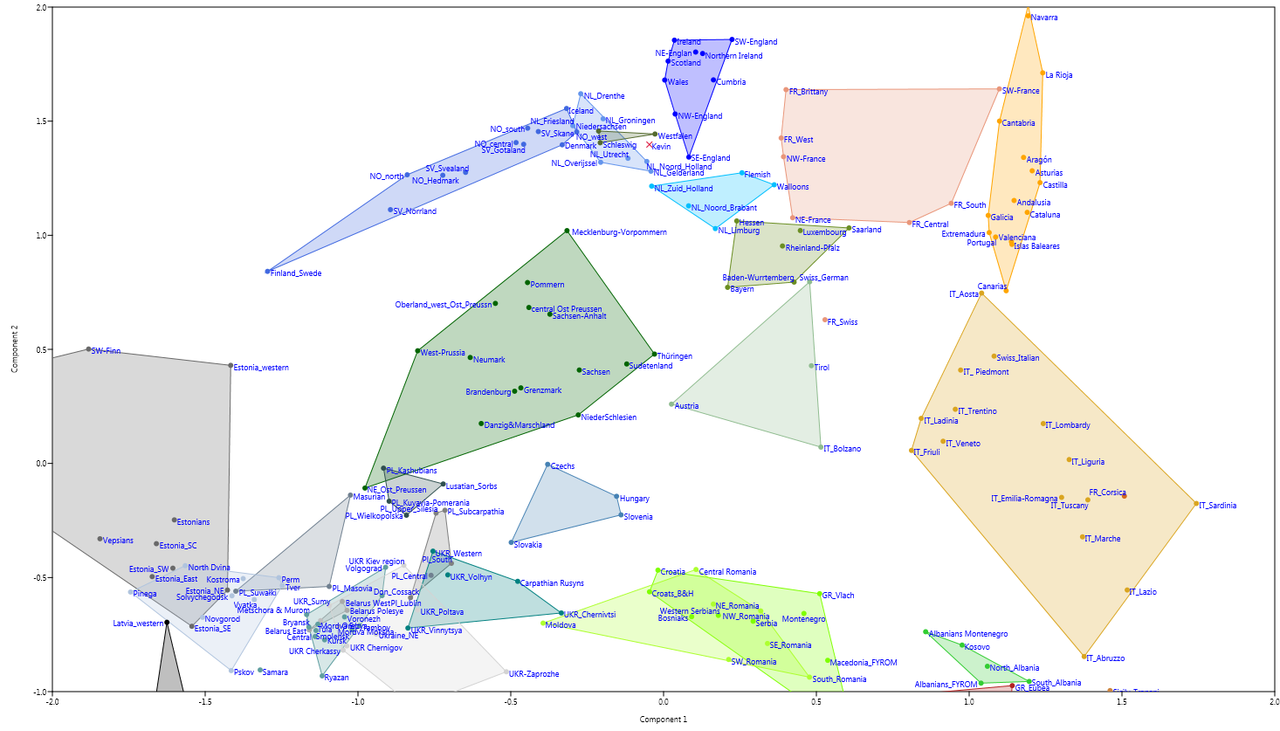
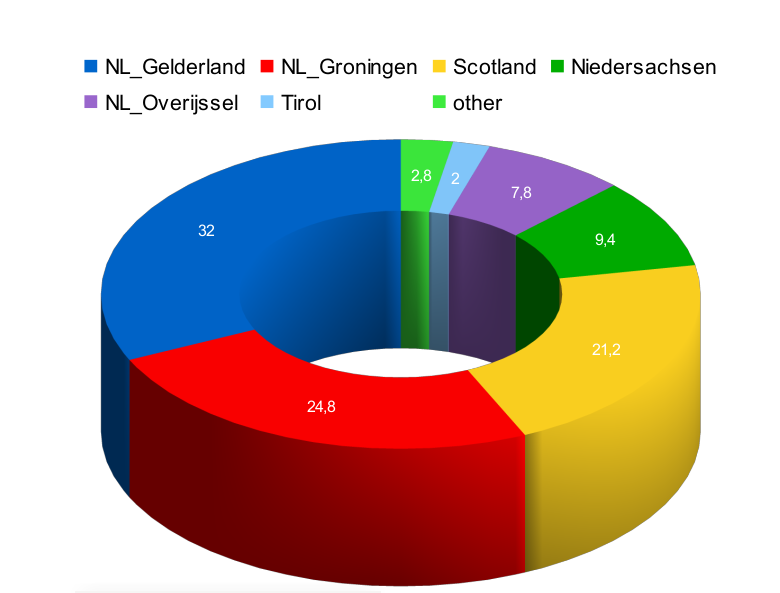
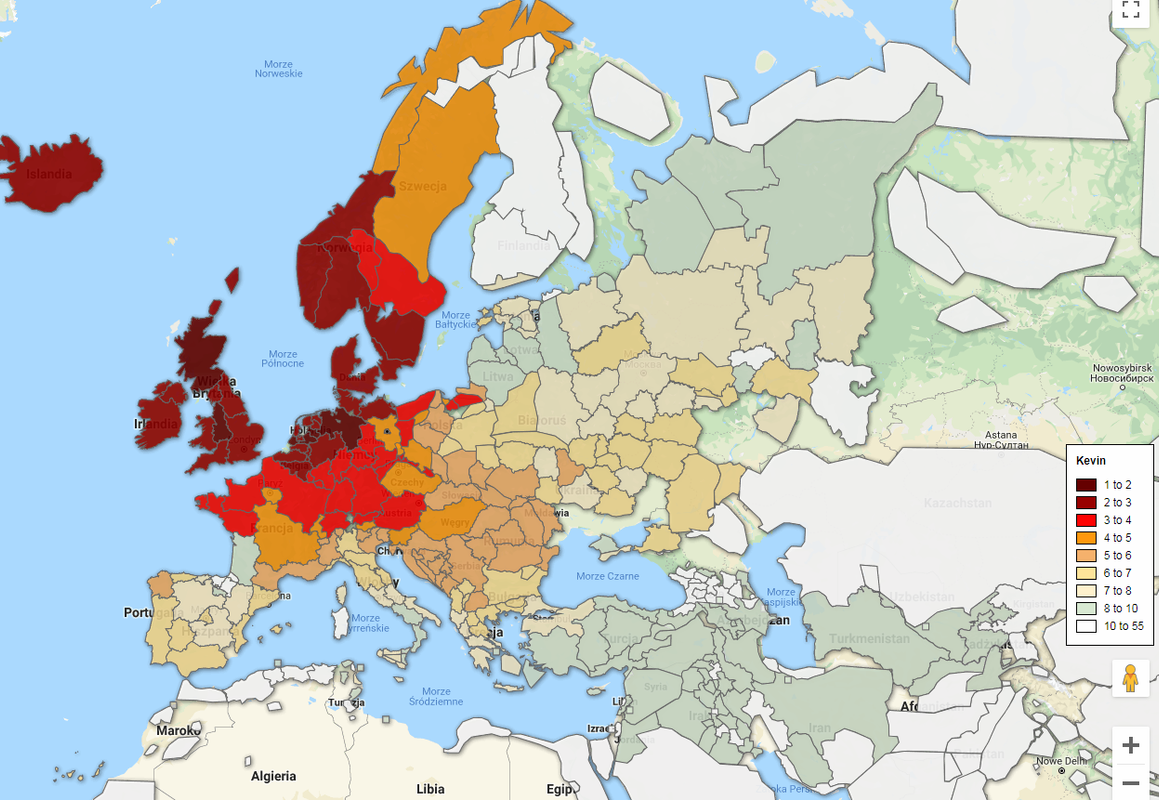
Are you sure ? I think it depends on what part of England. Also, Aren't south Dutch basically true krauts larping as Dutch unlike Saxons? I think it is more like French and Kraut admixture no more than 45 %with a quarter of it being kraut in Southern or SouthEast England or something. Anyhow, I hate to bring this back to me I was looking at my K36 report generated by Lukasz et. al. I'm convinced tools like K15 and K36 are generally superior to G25 not that G25 is terrible but the former tools have a focus on Europe. SouthEast England is the most continental but even Scots are true 'Celts'. You've probably seen this before a long time ago but to refresh your memory (the point of posting this is not to show where I plot but to show how NorthWest England etc.. plots closer to different more northern parts of the Netherlands and Scandinavia perhaps while SouthEast England is more continental and plots closer to the area you a describing it seems also Ireland plots relatively close to some northern parts of England and Scotland (?) :
Anyway, I only have my report to look at in full but here is my break down it says I'm part Scottish like 21% and I think liverpool has a strong Irish Gaelic presence :
^If the Tirol slice was significantly bigger I might plot more towards SouthEast England (not sure)
Here is my map it pretty much shows that Scotland is not really that Celtic perhaps and NorthWest England is more like Northern Netherlands perhaps while SouthEast England is perhaps a different beast ?
^ Apparently, I can walk around Liverpool England and Scotland blend in just fine but I'm not celt per se . Do Celts even exist outside of Ireland and perhaps Britanny France ? Also, there is probably more Celtic ancestry in the low countries than is generally realized but that does not make them 'celts'.
What would be cool if you could get Norb to do this k36 report from Lukasz and other people from SouthEast England for comparison.
| Thumbs Up/Down |
| Received: 6,251/169 Given: 1,440/2 |
I think its not Italian more like 45% French and kraut mix in southern parts of England and 25% of it is kraut or something.
| Thumbs Up/Down |
| Received: 17,266/194 Given: 8,168/117 |
Sure you do.
There are currently 1 users browsing this thread. (0 members and 1 guests)
 Posting Permissions

 Reply With Quote



Bookmarks